The Short Answer
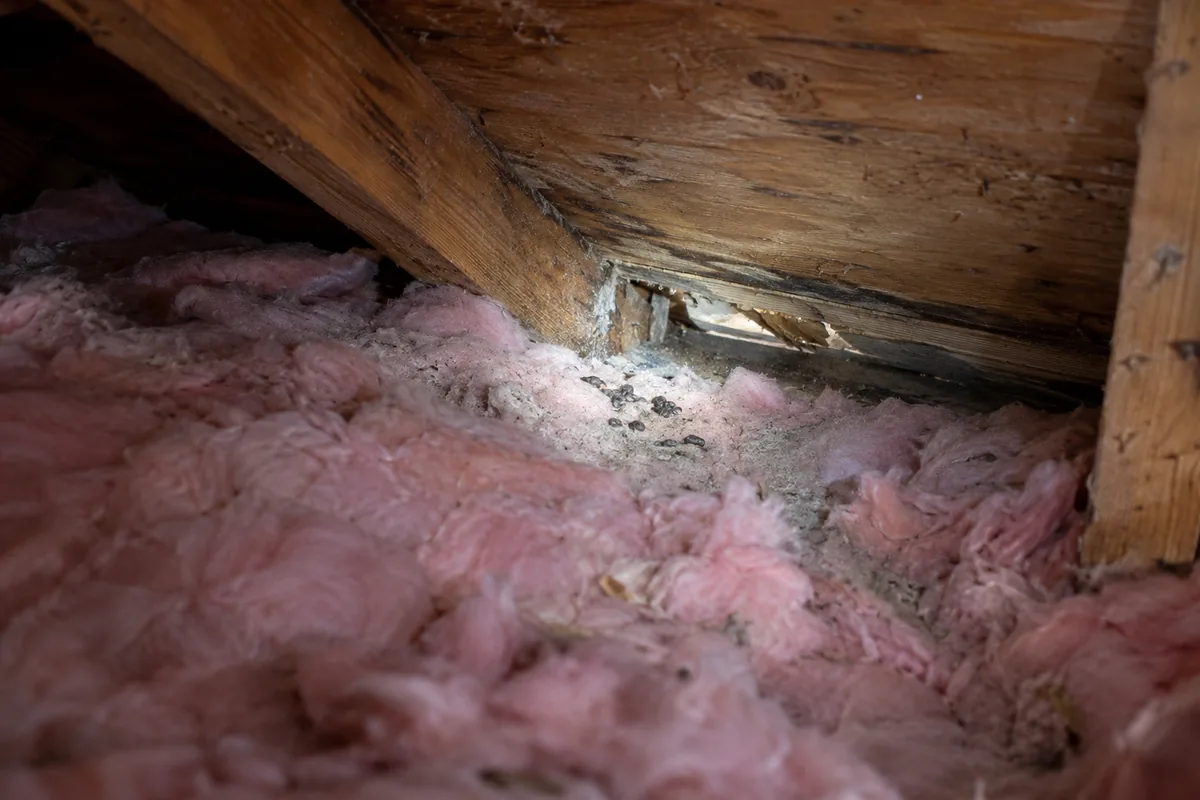
Look at the droppings first. Mouse droppings are tiny, about 1/8 to 1/4 inch long, like a grain of rice. Rat droppings are 1/2 to 3/4 inch long, closer to the size of a raisin. Where the noise comes from helps too. Activity in the attic, soffits or upper walls often points to roof rats. Activity along the slab, in the garage or behind the kitchen toe-kicks can be mice or Norway rats.
The answer matters because it changes the fix. Mice get through a gap the size of a dime and are easy to trap. Rats need a quarter-size opening, avoid new objects for days, and roof rats can get in anywhere up to the roofline. Whatever you’re dealing with, trapping only works for good once the way in is sealed. That’s why Unique Pest Control’s rodent control and exclusion starts with an inspection to find every entry point.
Mouse vs. Rat at a Glance
| House mouse | Roof rat | Norway rat | |
|---|---|---|---|
| Adult weight | About 1/2 ounce | 5 to 10 ounces | 7 to 18 ounces |
| Build | Small, 5 to 7 inches including the tail | Sleek and agile | Large and heavy-bodied |
| Head and ears | Small black eyes, relatively large ears | Pointed muzzle, ears reach the eyes | Blunt muzzle, smaller ears |
| Tail | About as long as the body, almost hairless | Longer than head and body, uniformly dark | Shorter than a roof rat’s, dark on top and pale below |
| Droppings | About 1/8 to 1/4 inch, rod-shaped | Up to about 1/2 inch, spindle-shaped with pointed ends | About 3/4 inch, capsule-shaped with blunt ends |
| Smallest opening | A dime-size hole or a 1/4-inch gap | A quarter-size hole or a 1/2-inch gap | A quarter-size hole or a 1/2-inch gap |
| Where it nests indoors | Warm, sheltered spots close to food | Attics, upper walls, ceiling voids | Ground level, crawl spaces, burrows by the foundation |
| Reaction to traps | Curious, investigates new objects | Very cautious of new objects | Cautious of new objects |
Sizes come from UC IPM’s rat guide, UC IPM’s house mouse guide, Texas A&M AgriLife Extension’s rodent IPM training and the University of Florida’s rat and mouse control guide. Measurements vary a little between sources, so treat them as ranges, not exact rules.
Start With the Droppings
Most people realize they have a rodent problem when they find droppings, and droppings are the most reliable clue you have. According to the University of Florida:
- House mouse: about 1/8 inch long and rod-shaped. Some sources put the larger ones at about 1/4 inch.
- Roof rat: up to about 1/2 inch and spindle-shaped, tapered at the ends.
- Norway rat: about 3/4 inch and capsule-shaped, with blunt ends.
Freshness tells you whether the problem is active. Fresh droppings are black, shiny and soft. Old droppings are gray, dusty and crumble when touched. If you clean an area and new droppings appear within a day or two, something is still visiting.
Be careful with one common mix-up. A young rat can look like a large mouse, and its droppings can fall in between. Young rats have big heads and feet for their bodies, while an adult mouse looks more evenly proportioned. If you find droppings of several sizes in the same spot, assume rats until you know otherwise.
Where You Hear It and What It Chews
Rodents are mostly active at night, especially in the first couple of hours after dark. Where you hear them is a strong clue:
- Scratching or running in the attic or ceiling at night: often roof rats, which climb well and nest up high. Mice can also climb into walls and attics.
- Noise in the lower walls, under cabinets or in the garage: mice or Norway rats.
- Scratching in the attic during the day: usually squirrels, not rats or mice.
Gnawing gives you another clue. Rodents gnaw constantly and can chew through wood, plastic, drywall and wiring. A mouse-size entry hole is about the size of a dime. A rat-size hole is closer to a quarter. Greasy dark rub marks along walls, beams or pipes show a regular travel route.
If you want to see what this evidence looks like in real homes and businesses, our Pest Library has photos from rodent inspections. They include rats along a drain pipe, near a baseboard vent and behind a cabinet toe-kick.
Roof Rats vs. Norway Rats in North Texas Homes
Texas A&M AgriLife lists three rodents that cause most problems in buildings: the house mouse, the roof rat and the Norway rat. If it’s a rat, working out which one tells you where to look.
Roof rats are sleek climbers. UC IPM notes that they nest in elevated, enclosed spaces like attics, wall voids and cabinets. They like mature trees, vines and dense shrubs. That describes many established North Texas neighborhoods, where oaks and pecans hang over the roof. A branch that touches the roof gives a roof rat a direct path to soffit corners, roof vents and attic gaps. Our page on pest control in Keller explains why tree canopy and deep soffit returns put homes there at higher risk.
Norway rats are heavier and burrow instead of climb. They usually stay at ground level: burrows along the foundation, crawl spaces, garages and the ground floor. They also need water every day, so look near leaky hose bibs, pet water bowls and drainage areas.
What that means for your search: for roof rats, check the roofline, soffits, vents, chimney chase and any tree limbs touching the house. For Norway rats, check the foundation, garage door seals, weep holes and the gaps where utility lines enter the slab.
Why Knowing Which Rodent It Is Changes the Fix
Treating every rodent the same way is why so many DIY efforts stall. Here’s how mice and rats differ in practice.
Trap placement and numbers. House mice rarely travel more than about 30 feet from their nest, so traps need to be close together. UC IPM suggests no more than about 10 feet apart, right where the activity is. Rats range much farther, so trap placement depends on their travel routes along walls and beams.
Trap shyness. Mice are curious and often go straight to a new trap. Rats are wary of new objects and may avoid traps for days or even weeks. Texas A&M AgriLife recommends leaving traps baited but unset for one to two weeks with rats so they get used to them before you set them. Setting a few traps the first night and giving up when nothing happens is a common mistake.
Trap size. Mouse traps are too small to hold a rat, and UC IPM notes that mice and small young rats often won’t set off a rat-size snap trap. Buying the right trap starts with knowing what you’re catching.
How high sealing has to go. UC IPM recommends sealing every opening larger than 1/4 inch, which keeps out both mice and rats. With roof rats, openings well above the ground matter as much as those at ground level, so finding every entry point takes longer. Trimming branches back at least 6 feet from the roof cuts off their access.
How fast it grows. A female house mouse can have 5 to 10 litters a year, so Texas A&M AgriLife advises acting on evidence of even one mouse. A problem that is one mouse in October can be dozens by spring.
Why Rodents Move Indoors in the Fall
House mice don’t hibernate. When nights get colder, house mice frequently move into homes looking for warmth, food and nesting material. That’s why many North Texas homeowners first hear scratching in the walls in the fall.
New construction does not protect a home. In fast-growing areas like Northlake, grading pushes rodents out of former pasture and into the nearest buildings, and new homes often have gaps around utility lines that nobody has found yet. A quick fall walk-around can catch the easiest entry points before rodents use them:
- Garage doors with daylight showing along the bottom seal
- Gaps where pipes, A/C lines, cables and dryer vents enter the wall
- Damaged screens on attic, roof or foundation vents
- Soffit corners and roof returns with visible gaps
- Tree branches and vines touching the roof or walls
- Pet food, bird seed and stored grains left open in the garage
Steel wool can plug a small hole for now, but it rusts over time. For a lasting repair, UC IPM recommends metal or concrete, because mice chew through plastic screening, rubber, vinyl, expanding foam and wood.
How to Clean Up Droppings Safely
Don’t sweep or vacuum rodent droppings, urine or nesting material. The CDC explains that this can send virus-carrying particles into the air, and breathing contaminated air is the main way rodent diseases reach people. Instead:
- Open doors and windows for 30 minutes before you start, and leave the area while it airs out.
- Put on rubber or plastic gloves.
- Spray droppings and urine until they are soaking wet with a disinfectant or a fresh bleach solution of 1 part bleach to 9 parts water. Let it soak for 5 minutes, or as long as the product label says.
- Wipe it up with paper towels and throw them in a covered trash can.
- Mop or wipe the surrounding floors, counters and cabinets with disinfectant.
- Wash your gloved hands, take off the gloves, then wash your hands with soap and warm water.
The CDC calls for extra precautions in heavily infested homes, and recommends a professional if rodents have gotten into heating and cooling ducts.
Rodent Control and Exclusion in North Texas
Rodents are one of the most common reasons homeowners call us, especially in older Denton homes where decades of settling leave gaps around foundations, utility lines and soffits. Trapping alone is temporary. If the entry point is still open, the next rodent finds it.
That’s why Unique Pest Control’s rodent control and exclusion works in this order:
- Inspect: we inspect inside and out, including the attic, garage, roofline and utility penetrations, and assess the activity we find.
- Seal: we close every accessible entry point with materials rodents can’t chew through.
- Remove: we place and monitor traps, with follow-up visits until activity stops.
- Clean up: we give sanitation recommendations and clean up droppings and nesting material.
The sealing work usually takes one visit. Trapping and removal usually takes a few follow-up visits over two to three weeks, depending on how established the rodents are. We serve Northlake, Keller, Denton, Flower Mound, Roanoke and communities across North Texas. Same-day service is available, and our work is backed by our 100% satisfaction guarantee.
Hearing scratching or finding droppings? Call (817) 345-4453 to talk to a real person, or Get a Free Quote online.
Frequently Asked Questions
Is it a baby rat or a mouse?
Look at the proportions. Young rats have large heads and oversized feet for their bodies, while adult mice look more evenly proportioned. Droppings help too. If you find several sizes in one area, plan for rats.
Can mice and rats get in through the same holes?
Mice can use anything a rat can, plus much smaller gaps. A mouse needs only a 1/4-inch gap or a dime-size hole, and a rat needs about a 1/2-inch gap or a quarter-size hole. Sealing every opening larger than 1/4 inch keeps out both.
Is one mouse really a problem?
Usually, yes. One mouse you see often means more you don’t. House mice breed quickly and can have 5 to 10 litters a year. Acting at the first sign is faster and cheaper than dealing with an established population.
Are mouse and rat droppings dangerous?
They can carry disease. The main risk comes from breathing in dust from droppings, urine and nesting material, which is why the CDC says never to sweep or vacuum them. Spray them with disinfectant and wipe them up with gloves instead.
How long does it take to get rid of rodents?
With professional exclusion, the sealing work usually takes one visit, and trapping and removal take a few follow-up visits over two to three weeks. Rats can take longer than mice because they avoid new traps at first.